
Don’t Let an Uneven Garage Floor Compromise Your Home’s Safety and Value
That gap growing between your garage floor and the wall isn’t just an eyesore—it’s a sign of a deeper issue. For many Denver homeowners, a sinking or uneven garage floor is a common, yet serious, problem. It creates dangerous trip hazards, allows water to pool and cause further damage, and can even strain your home’s foundation. Fortunately, there’s a modern, minimally invasive solution that restores your garage floor quickly and permanently.
Why Garage Floors Sink: The Denver-Specific Causes
The Challenge of Colorado’s Expansive Soil
The ground beneath our feet is the primary culprit. Much of the Denver area is built on expansive clay soils. This type of soil acts like a sponge; it swells significantly when it absorbs moisture from rain and snowmelt, then shrinks as it dries out during our arid summers. This constant cycle of expansion and contraction exerts immense pressure on your garage slab, causing it to shift, settle unevenly, and eventually sink.
Water Intrusion and Sub-base Erosion
Water always follows the path of least resistance. Poor drainage from downspouts, improper grading around your home, or even subsurface plumbing leaks can channel water directly beneath your garage. This flow can gradually wash away the soil and gravel base that supports the concrete slab, creating hidden voids. Without solid support, the heavy concrete slab will inevitably sink into these empty spaces.
Poor Initial Compaction
When a home is built, the soil around the foundation is excavated and then backfilled. If this backfilled soil isn’t properly compacted layer by layer, it will naturally settle and compress over time under the immense weight of the concrete garage floor. This gradual settlement leads to the sinking and cracking you see years after construction.
Telltale Signs of a Failing Garage Floor
Recognizing the early warning signs can save you from more extensive and costly repairs down the road. Keep an eye out for these indicators.
Visible Cracks and Gaps
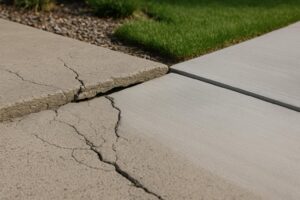
Look for cracks wider than a hairline, especially those running the length of the floor. A prominent sign is a gap forming between the concrete slab and your home’s foundation wall or the front of the garage where it meets the driveway.
Noticeable Sloping
Does water pool in certain areas after it rains or snow melts off your car? Try the “marble test”—place a marble on the floor and see if it consistently rolls to one side. A sloping floor is a definite sign of uneven settlement and a significant trip hazard.
Sticking Doors or Windows
If the door leading from your garage into your home has become difficult to open or close, it could be a sign that the sinking slab is pulling the door frame out of alignment. This indicates a more advanced stage of settlement.
The Superior Solution: Polyurethane Foam Injection
Gone are the days of disruptive and messy mudjacking or the high cost of complete concrete replacement. Polyurethane foam injection, also known as poly-lifting, is the modern, efficient, and long-lasting method for garage floor leveling in Denver.
How Poly-Lifting Works: A Simple Process
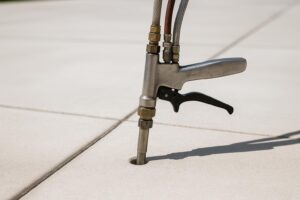
- Small Injection Points: Our team drills a few small holes, roughly the diameter of a dime, through the sunken sections of your garage floor.
- Foam Injection: We inject a two-part, eco-friendly polyurethane foam into the voids beneath the slab.
- Controlled Expansion: The foam undergoes a chemical reaction and expands, filling every gap and crevice, compacting the loose soil beneath, and gently lifting the concrete back to its original, level position.
- Immediate Use: The foam cures and hardens to full strength in a matter of minutes. The holes are patched, and you can typically park your car back in the garage the very same day.
Polyurethane vs. Mudjacking
- ✅ Lightweight: Polyurethane weighs only 2-4 lbs per cubic foot, adding minimal weight to already unstable soil. Mudjacking slurry can weigh over 100 lbs per cubic foot.
- ✅ Smaller Holes: 5/8-inch holes are far less invasive and noticeable than the 1-2 inch holes required for mudjacking.
- ✅ Waterproof: The closed-cell polymer is hydrophobic, meaning it repels water and will not break down or wash away over time, preventing future erosion.
- ✅ Durable & Permanent: Polyurethane foam is a long-term solution that stabilizes the soil and supports the slab for decades without shrinking or degrading.
Did You Know?
- The polyurethane foam used for concrete lifting is incredibly strong. Once cured, it can support significant loads, easily handling the weight of cars, trucks, and stored items in your garage.
- Because polyurethane is environmentally inert and non-toxic once cured, it doesn’t leach harmful chemicals into the surrounding soil, making it a green choice for your property.
- The process is so clean and contained that there’s virtually no mess left behind. Unlike mudjacking or concrete replacement, your landscaping and property remain undisturbed.
The Right Choice for Garage Floor Leveling in Denver
Living in Denver means dealing with unique environmental challenges. Our fluctuating weather and expansive soils demand a specialized solution. Polyurethane foam is ideal for our conditions because it’s lightweight and won’t overburden the volatile soil. Furthermore, its waterproof nature provides an essential moisture barrier, protecting against future settlement caused by the very soil and water issues that created the problem in the first place.
Ready to Restore Your Garage Floor?
Stop worrying about trip hazards and further property damage. Elevate Concrete Lifting provides Denver homeowners with a fast, reliable, and permanent solution for sinking garage floors. Reclaim your space with a level, stable, and safe surface.
Frequently Asked Questions
How long does the garage floor leveling process take?
Most residential garage floor leveling projects are completed in just a few hours. Because the foam cures so quickly, you can typically walk on the surface immediately and drive on it the same day, minimizing disruption to your routine.
Is polyurethane foam injection messy?
Not at all. The process is very clean. Our specialized equipment is contained within our truck, and we only bring a hose and nozzle into the work area. There is no heavy machinery on your lawn and no concrete or mud slurry to clean up afterward.
Is the lifted concrete as strong as it was before?
Yes, and often it’s even stronger. The polyurethane foam not only lifts the slab but also stabilizes the soil beneath it by filling all voids and compacting loose dirt. This creates a solid, stable base that provides consistent support across the entire slab, preventing future sinking.
How much does garage floor leveling cost in Denver?
The cost of garage floor leveling is significantly less than the cost of tearing out and replacing the entire concrete slab—often less than half the price. The exact price depends on the size of the area to be lifted and the extent of the voids underneath. We provide free, no-obligation estimates to give you an exact quote for your specific situation.
Key Terms to Know
- Polyurethane Foam Injection
- A modern concrete lifting technique that uses an expanding, high-density polymer foam injected beneath a concrete slab to lift, level, and stabilize it.
- Sub-base
- The layer of gravel and compacted soil directly underneath a concrete slab that provides structural support.
- Expansive Clay Soil
- A type of soil common in the Denver area that swells dramatically when wet and shrinks when dry, causing instability for structures built on top of it.
- Slab Settlement
- The process where a concrete slab sinks or drops below its original position, typically due to a loss of support from the sub-base.