

Explore How Minimally Invasive Foam Injection Saves Time and Reduces Downtime for Your Denver Property
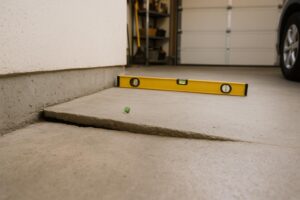
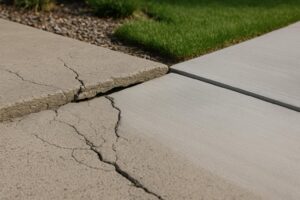
Uneven concrete isn’t just an eyesore; it’s a disruption. From a cracked driveway that poses a daily inconvenience to a sunken warehouse floor that halts operations, the problem often comes with a hidden cost: downtime. Traditional concrete replacement can mean days or even weeks of mess, noise, and inaccessibility. Fortunately, modern technology offers a superior alternative. Non-invasive concrete lifting with polyurethane foam injection provides a strong, stable, and remarkably fast solution, getting your life or business back to normal with minimal interruption.
What is Non-Invasive Concrete Lifting?
Non-invasive concrete lifting, often called poly-lifting or slab-jacking, is a state-of-the-art method for repairing sunken concrete. The process is both simple and highly effective. Here at Elevate Concrete Lifting, we specialize in polyurethane foam injection, a technique that stands out for its efficiency and durability.
Unlike old-school mudjacking, which requires large holes and a heavy slurry mixture, our method uses a lightweight, high-density polyurethane foam. We drill a few small, dime-sized holes into the sunken slab and inject the two-part polymer. As the components mix beneath the surface, they create an expanding foam that exerts thousands of pounds of pressure, hydraulically lifting the concrete back to its original position. The foam then cures into a rigid, waterproof, and incredibly strong material that stabilizes the underlying soil and supports the slab for years to come.
Why Speed is Crucial in Concrete Repair
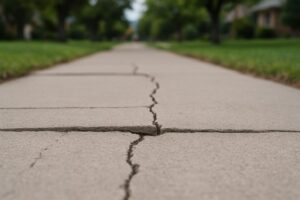
Delaying concrete repair can turn a small problem into a major expense. A sunken sidewalk slab or uneven patio is more than a trip hazard. Water can pool in low spots, seep into cracks, and erode the soil base further, accelerating the damage. During Denver’s freeze-thaw cycles, this trapped moisture can cause even more significant heaving and cracking.
For businesses, the stakes are even higher. An uneven floor in a commercial space can be an ADA compliance issue, a safety liability for employees and customers, and can damage sensitive equipment like forklifts. Every hour of downtime for repairs translates directly to lost productivity and revenue. A quick concrete repair solution isn’t just convenient—it’s essential for your bottom line.
Key Time-Saving Advantages of Foam Injection
1. Minimal Site Disruption & Preparation
There’s no need for large, noisy excavators or demolition equipment. Our foam injection system is contained within a single truck and trailer. This means less noise, less mess, and no damage to your surrounding landscaping or property. We can work in tight spaces and get the job done without turning your property into a construction zone.
2. The Rapid Application Process
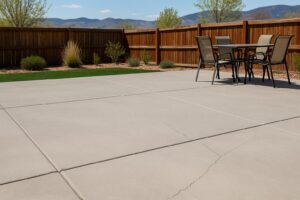
The process of drilling, injecting, and lifting is remarkably fast. What could take a full day or more with traditional methods can often be completed in just a few hours. A typical residential concrete lifting project, like a driveway or patio, is usually finished on the same day it starts.
3. Lightning-Fast Curing Time
This is the most significant time-saving benefit. The high-density polyurethane foam we use cures to approximately 90% strength in just 15-30 minutes. This means you can walk on your sidewalk, park your car on your driveway, or move equipment across your warehouse floor almost immediately after the job is complete. Concrete replacement, by contrast, requires you to wait days—or even a week—before the surface is ready for use.
4. No Heavy Cleanup Required
With tiny injection holes and no excavated soil or concrete slurry, cleanup is minimal. We simply patch the small holes with cement, and the area is restored. There’s no leftover debris, no dust clouds, and no need to re-seed your lawn from damage caused by heavy machinery.
Foam Injection vs. Traditional Replacement: A Time Comparison
| Feature | Polyurethane Foam Injection | Traditional Concrete Replacement |
|---|---|---|
| Project Duration | Typically a few hours | 2 to 5+ days |
| Cure Time (Ready for Use) | 15-30 minutes | 3 to 7 days for full traffic |
| Disruption Level | Minimal (small holes, no heavy equipment) | High (demolition, noise, dust, formwork) |
| Cleanup | Minor patching of holes | Extensive (debris removal, landscape repair) |
The Denver Climate: A Case for Speedy Repairs
In Denver and across the Front Range, our unique soil and climate conditions make timely concrete repair especially important. The region is known for its expansive clay soil, which swells dramatically when wet and shrinks when dry. This constant movement puts immense stress on concrete slabs. Add in the intense freeze-thaw cycles of a Colorado winter, and you have a perfect recipe for sinking and cracking.
A quick, non-invasive repair addresses these issues before they escalate. By lifting the slab and stabilizing the soil beneath it with waterproof polyurethane foam, you create a barrier against future water intrusion. This protects your investment and prevents the cycle of damage from repeating itself next season. From protecting home foundations to ensuring safe commercial walkways, addressing problems with a fast and reliable repair service is the smartest move for any Colorado property owner.
Did You Know?
The polyurethane foam used for concrete lifting is incredibly lightweight, typically weighing only 2-4 pounds per cubic foot. In contrast, a traditional mudjacking slurry can add thousands of pounds of pressure to already unstable soil. This makes foam injection a superior solution for preserving the long-term integrity of the ground beneath your concrete.
Stop Waiting and Start Lifting!
Don’t let sunken concrete disrupt your life or business any longer. The team at Elevate Concrete Lifting offers a faster, cleaner, and more durable solution. Our expert technicians are ready to restore your concrete surfaces with minimal downtime.
Frequently Asked Questions
How long until I can use my driveway after foam injection?
You can typically walk on the treated surface within 15 minutes and drive a vehicle on it within 30 minutes. This rapid return to service is one of the key benefits of polyurethane foam.
Is non-invasive concrete lifting a permanent solution?
Yes, it is a long-term repair. The high-density polyurethane foam is environmentally stable, waterproof, and will not break down or wash away over time. It provides durable support for your concrete slab for many years.
Will the process damage my property?
No, foam injection is designed to be minimally invasive. The injection holes are the size of a dime, and we don’t use heavy equipment that can crack adjacent concrete or damage your lawn and landscaping.
Is it more expensive than replacing the concrete?
Polyurethane concrete lifting is almost always more cost-effective than a full tear-out and replacement. You save on demolition, material, and labor costs, making it a budget-friendly choice that doesn’t compromise on quality.
Can you fix any concrete problem with foam?
Foam injection is ideal for lifting and stabilizing sunken slabs. However, if the concrete itself is severely cracked, crumbled, or spalled, replacement might be the only option. Our team can assess the damage and recommend the best solution, which may include our crack and joint sealing services for minor issues.
Glossary of Terms
Curing Time: The amount of time it takes for a material like polyurethane foam or new concrete to harden and reach its specified strength.
Expansive Soil: Soil, common in Colorado, that experiences significant volume changes, swelling when wet and shrinking when dry, which can cause concrete slabs to shift and settle.
Polyurethane Foam: A two-part polymer that, when mixed, rapidly expands and hardens into a lightweight but incredibly strong and rigid material used to lift and support concrete.
Slab: A flat, thick piece of concrete, such as a driveway, patio, sidewalk, or building foundation floor.
Freeze-Thaw Cycle: The climatic cycle of temperatures dropping below freezing (32°F/0°C) and rising above it. Water that has seeped into cracks or soil expands when it freezes, exerting powerful forces that can crack and heave concrete.
One Response
https://shorturl.fm/MMDOP