

Understanding Your Concrete Lifting Options in the Mile High City
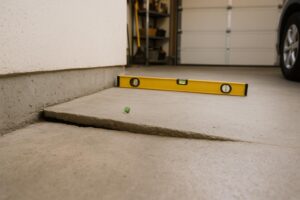
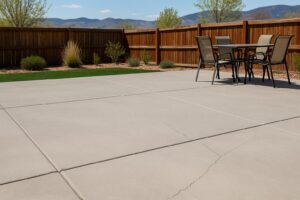
If you’ve noticed your driveway, patio, or walkway in Denver starting to sink, crack, or become uneven, you’re not alone. The unique soil conditions and climate in our area can be tough on concrete surfaces. This settling not only looks bad but can also create dangerous tripping hazards. Fortunately, you don’t have to resort to costly and disruptive concrete replacement. Two primary methods for lifting concrete are available: traditional mudjacking and modern polyurethane foam injection. Making the right choice between them can save you time, money, and future headaches, ensuring your property is safe and looks its best.
What is Mudjacking? The Traditional Approach
Mudjacking, sometimes called slab jacking, has been the standard method for lifting concrete for decades. The process involves drilling relatively large holes, typically 1 to 2 inches in diameter, into the sunken concrete slab. A heavy slurry—a mixture of soil, sand, cement, and water—is then pumped under high pressure through these holes. This mixture fills the voids beneath the slab, forcing it upward until it’s level again. While it’s a proven method, it has some significant drawbacks to consider.
What is Polyurethane Foam Injection? The Modern Solution
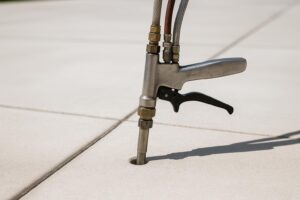
Polyurethane foam injection, often called poly-lifting or poly-jacking, is a more advanced technique that uses a high-tech polymer to achieve the same goal. The process begins by drilling small, dime-sized holes (usually 5/8-inch) into the concrete. A two-part liquid polyurethane foam is then injected into these holes. The components mix and undergo a chemical reaction, causing the foam to expand, fill any voids, and lift the concrete with incredible force. The foam hardens quickly into a strong, durable, and waterproof material that stabilizes the slab for the long term.
A Head-to-Head Comparison: Foam vs. Mud
When deciding on the best repair method for your property, it’s helpful to see how these two techniques stack up against each other across key factors.
| Feature | Polyurethane Foam Injection | Mudjacking |
|---|---|---|
| Material Weight | Extremely lightweight (2-4 lbs/cu. ft.). | Very heavy (100+ lbs/cu. ft.). |
| Hole Size | Small, 5/8-inch holes (dime-sized). | Large, 1-2 inch holes. |
| Cure Time | Usable within 15-30 minutes. | Requires 24-72 hours to cure. |
| Durability | Waterproof, inert, and does not break down or wash away. | Susceptible to water erosion and can break down over time. |
| Aesthetics | Patched holes are nearly invisible. | Large, obvious patches that may not match existing concrete. |
| Upfront Cost | Generally higher initial cost. | Typically lower initial cost. |
Why Denver’s Climate and Soil Matter
The choice between these two methods becomes even clearer when you consider Denver’s specific geological challenges. Much of the Front Range is built on expansive clay soils, often containing bentonite. This type of soil acts like a sponge—it swells dramatically when it absorbs water from rain or snowmelt and shrinks as it dries out during our arid summers. This constant cycle of expansion and contraction puts immense pressure on concrete slabs, causing them to heave, crack, and settle unevenly.
This is where polyurethane foam has a distinct advantage:
- It Doesn’t Add Weight: Mudjacking slurry is incredibly heavy, adding up to 100 pounds per cubic foot to soil that is already unstable. This extra weight can lead to further sinking over time. Polyurethane foam, at only 2-4 pounds per cubic foot, lifts the slab without burdening the soil below.
- It’s Waterproof: The mudjacking slurry can absorb moisture and erode, especially during Colorado’s freeze-thaw cycles. Polyurethane foam is hydrophobic, meaning it repels water. It creates a stable, waterproof barrier under your slab, protecting it from the damaging effects of expansive soil.
For a long-term solution that addresses the root cause of concrete settlement in Denver, polyurethane foam is the superior choice. It works with our environment, not against it.
Did You Know?
- The expansion process of polyurethane foam is so powerful it can lift massive slabs of concrete, supporting thousands of pounds per square foot.
- Because polyurethane foam cures so quickly, you can typically drive on a lifted driveway in as little as 15 minutes after the job is complete.
- Polyurethane foam is environmentally stable. It does not leach chemicals into the surrounding soil.
Ready to Restore Your Concrete?
Don’t let sunken concrete diminish your property’s value and safety. At Elevate Concrete Lifting, we specialize in state-of-the-art polyurethane foam injection to provide Denver property owners with a fast, durable, and minimally invasive solution.
Frequently Asked Questions (FAQ)
1. Is polyurethane foam injection more expensive than mudjacking?
Polyurethane foam typically has a higher upfront cost than mudjacking. However, because it is a more permanent and durable solution that resists erosion and re-settling, it often proves more cost-effective in the long run by eliminating the need for future repairs.
2. How long does the polyurethane foam solution last?
High-density polyurethane is an incredibly durable, inert material. It is waterproof and does not break down or decay in the soil. The repair should last as long as the concrete slab itself.
3. Will the process damage my landscaping?
Polyurethane foam injection is a very clean and targeted process. The equipment is less cumbersome than mudjacking equipment, and the small injection holes minimize disruption to your property and surrounding landscape.
4. Can foam lifting be done in any weather?
One of the benefits of polyurethane foam is that it can often be installed in a wider range of temperature and weather conditions compared to mudjacking slurry, which can be sensitive to freezing temperatures.
Glossary of Terms
- Expansive Clay Soil
- A type of soil common in Denver that significantly swells in volume when wet and shrinks when it dries, causing instability for foundations and concrete slabs.
- Mudjacking
- A traditional concrete lifting method that involves pumping a heavy slurry of cement, soil, and sand under a sunken slab to raise it.
- Polyurethane Foam Injection (Poly-lifting)
- A modern concrete lifting technique where a lightweight, expanding polymer foam is injected under a concrete slab to lift, level, and stabilize it.
- Slab
- A flat, thick piece of concrete, such as a driveway, sidewalk, or patio floor.

One Response
https://shorturl.fm/s7fNQ