

Restore Your Home’s Foundation from the Ground Up
An uneven or sinking basement floor is more than just an eyesore; it’s a potential warning sign of underlying issues that could compromise your home’s structural integrity. For homeowners in Glendale and the greater Denver area, the unique soil composition and climate can often be the culprits. Ignoring the subtle signs—like cracks appearing in drywall or doors that no longer close properly—can lead to more significant and costly repairs down the road. Fortunately, modern solutions offer a minimally invasive, long-lasting fix. Polyurethane foam injection provides a powerful way to lift and stabilize your concrete, restoring safety and peace of mind without the mess and disruption of a total replacement.
Understanding Why Your Glendale Basement Floor is Sinking
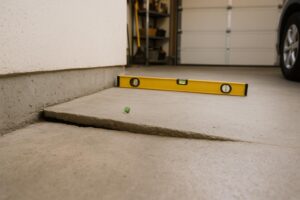
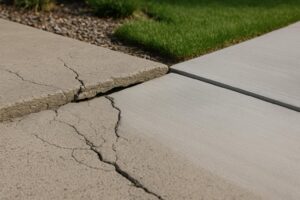
The ground beneath our homes is not as static as we might think. Several factors, particularly prevalent in the Denver region, can cause the soil to shift, compact, or wash away, leading to voids under your basement slab. When the concrete loses its support, it begins to sink and crack under its own weight.
- Expansive Clay Soils: Much of Colorado, including the Glendale area, has bentonite clay soil. This type of soil acts like a sponge, swelling dramatically when it absorbs water and shrinking as it dries. This constant cycle of expansion and contraction exerts immense pressure on your foundation, causing it to shift, settle, and crack over time.
- Poor Drainage and Erosion: Heavy rains or snowmelt can oversaturate the ground around your foundation. If drainage is poor, this water can wash away the soil supporting the concrete slab, creating voids. Your basement floor then sinks into these empty spaces.
- Soil Compaction: Sometimes, the soil used as backfill during your home’s construction wasn’t properly compacted. Over time, the weight of the concrete slab and the house itself can compress this loose soil, causing the floor to settle.
- Freeze-Thaw Cycles: Denver’s fluctuating temperatures create frequent freeze-thaw cycles in the winter. Moisture in the soil freezes and expands, pushing against the slab (a process known as frost heave), and then contracts when it thaws. This repeated movement can destabilize the foundation.
The Modern Solution: Polyurethane Concrete Lifting
In the past, the primary method for fixing sunken concrete was “mudjacking,” a process that involved pumping a heavy slurry of concrete, sand, and soil beneath the slab. Today, Elevate Concrete Lifting utilizes a far more advanced, precise, and durable technology: polyurethane foam injection, also known as polyjacking.
This innovative process offers a superior solution. Here’s how it works:
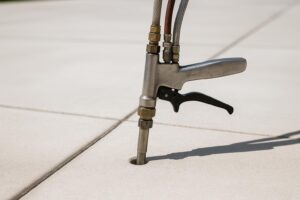
- Strategic Drilling: Our team drills a few small, dime-sized holes into the sunken sections of your basement floor. This process is neat and minimally invasive.
- Foam Injection: We inject a two-part, high-density polyurethane foam as a liquid through these holes. The components mix below the slab and undergo a chemical reaction.
- Expansion and Lifting: Within seconds, the liquid expands into a strong, lightweight, and rigid foam, filling every void and crevice. This controlled expansion exerts a powerful force, lifting the concrete slab back to its original, level position with incredible precision.
- Quick Curing and Finishing: The foam cures rapidly, often becoming fully supportive within 15-30 minutes. Once the lifting is complete, we patch the small drill holes, leaving behind a virtually seamless repair.
Polyurethane Lifting vs. Traditional Methods
| Feature | Polyurethane Foam Injection (Polyjacking) | Mudjacking | Full Concrete Replacement |
|---|---|---|---|
| Invasiveness | Minimal. Small, dime-sized drill holes. | More invasive. Requires larger holes (1-2 inches). | Extremely disruptive. Requires demolition and removal. |
| Cure Time | Fast. Ready for use in under an hour. | Slow. Can take 24-48 hours to cure. | Very slow. Can take days or weeks to fully cure. |
| Weight | Very lightweight (2-4 lbs/cu. ft.), placing no extra burden on the soil. | Very heavy (100+ lbs/cu. ft.), which can cause further soil compaction. | Heavy, and requires stable, well-compacted soil. |
| Durability & Seal | Permanent solution. The foam is waterproof, resists erosion, and stabilizes the underlying soil. | Can shrink, crack, and wash away over time, requiring repeat repairs. | Durable, but does not address the root cause of the soil issue. |
Did You Know?
- Fact 1: Polyurethane foam used for concrete lifting is incredibly strong. Despite being lightweight, it can support thousands of pounds per square foot, making it more than capable of handling the weight of your home.
- Fact 2: The technology was first developed for major infrastructure projects, like raising airport runways and stabilizing bridge approaches, before being adapted for residential use.
- Fact 3: The polyurethane material is environmentally inert. It will not break down or leach chemicals into the surrounding soil, making it a safe and green choice.
Your Local Glendale & Denver Concrete Experts
Living in Glendale means contending with specific environmental challenges that affect your property’s foundation. From the expansive bentonite clay soil to the drastic seasonal weather changes, the ground here is always in motion. Elevate Concrete Lifting isn’t just a service provider; we are local experts who understand these unique conditions intimately. We tailor our concrete lifting solutions to address the root causes of sinking slabs in our community, ensuring a repair that is not only effective but also built to last against the pressures of the Colorado climate. Choosing a local company means you get a team that is familiar with the problems your neighbors face and is dedicated to protecting the value and safety of homes in our area.
Ready to Restore Your Basement Floor?
Don’t let a sinking basement floor compromise your home’s safety and value. The team at Elevate Concrete Lifting is ready to provide a fast, effective, and lasting solution. Contact us today for a free, no-obligation estimate.
Frequently Asked Questions (FAQ)
How long does the basement concrete lifting process take?
Most residential basement lifting projects are completed in just a few hours. The area is typically ready for normal use almost immediately after the job is finished, as the foam cures very quickly.
Is polyurethane foam injection a permanent solution?
Yes, it is considered a permanent solution. The high-density polyurethane foam is waterproof, stable, and will not degrade or break down over time. It also addresses the underlying issue by compacting loose soil and filling voids, preventing future sinking.
Will the process make a mess in my basement?
No. Polyurethane foam injection is a very clean process. There is no heavy machinery brought into your home, and the injection equipment is contained. The small drill holes are the only evidence of the work, and they are neatly patched afterward.
Is concrete lifting cheaper than replacing the whole floor?
Absolutely. Polyurethane concrete lifting is typically less than half the cost of demolishing and replacing a concrete slab. It also saves you from the additional costs and time associated with excavation and reconstruction.

One Response
https://shorturl.fm/ctMcc