
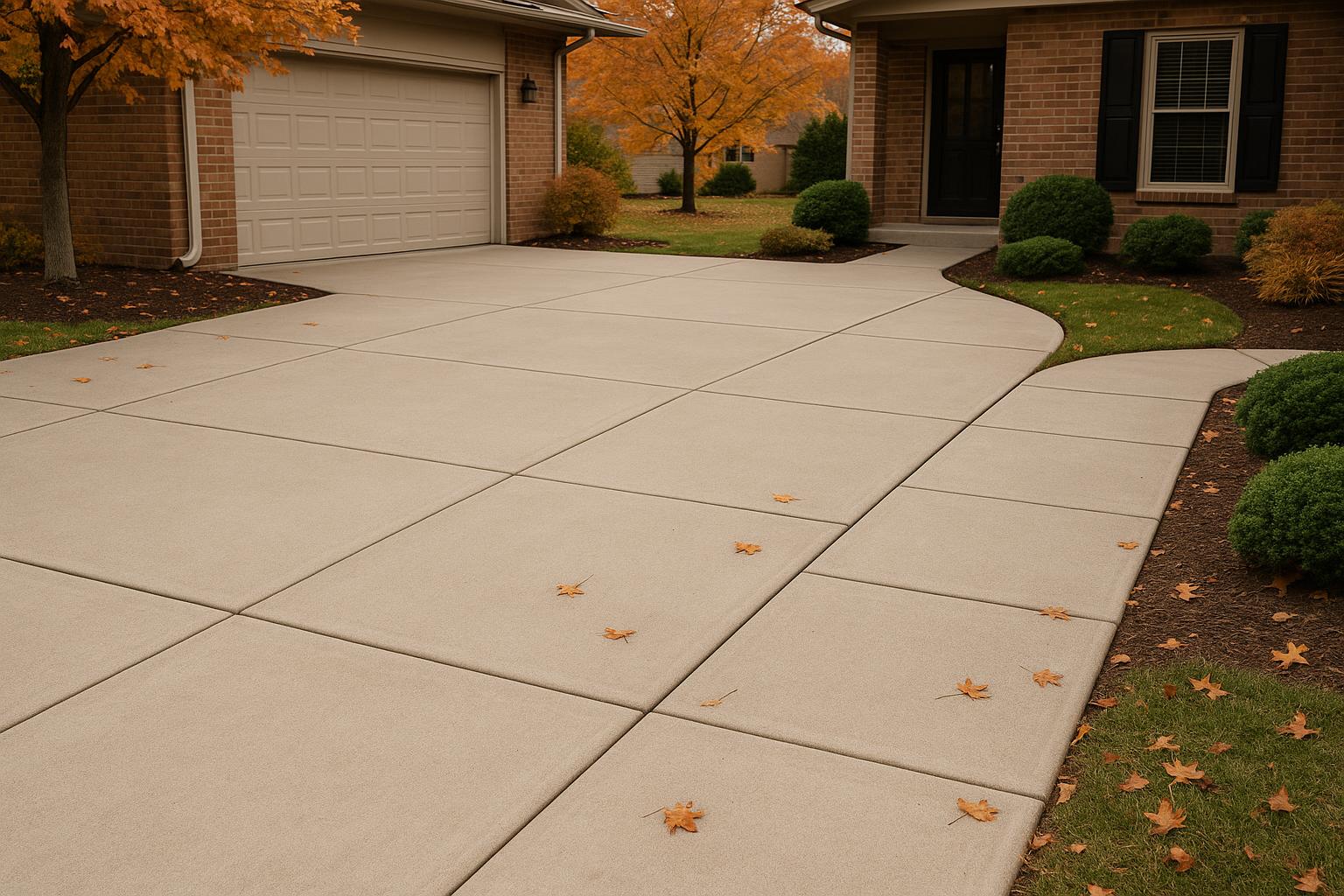
Protect Your Property: A Proactive Guide for Denver Homeowners
As summer fades and the crisp autumn air settles over Denver, our attention shifts to winter preparations. We rake leaves, winterize sprinklers, and brace for the first snowfall. But one critical task often overlooked is inspecting our concrete surfaces. The freeze-thaw cycles that characterize a Colorado winter can wreak havoc on driveways, patios, and walkways. Addressing uneven concrete *before* the first frost isn’t just about aesthetics; it’s a crucial step in preventing costly damage and ensuring the safety of your property. Waiting until spring often means dealing with more significant problems, from trip hazards to foundational water issues.
Understanding the Freeze-Thaw Cycle’s Impact on Your Concrete
To appreciate the urgency of pre-frost concrete care, it’s important to understand what happens beneath the surface. The soil in Colorado, particularly around the Denver area, can be expansive. When moisture seeps through cracks or under a settled concrete slab, it saturates this soil. As temperatures drop below freezing, the trapped water expands, a powerful process known as frost heave. This expansion can push concrete slabs upward, creating uneven surfaces. When the temperatures rise again, the ice melts, and the soil contracts, leaving voids under the concrete. This repeated cycle of lifting and settling weakens the soil’s supportive structure, leading to progressively worse sinking and cracking over time.
This instability not only creates dangerous trip hazards but can also redirect water flow towards your home’s foundation, potentially causing serious structural damage. Proactive concrete lifting and leveling stabilizes the soil and slab, mitigating the destructive effects of winter.
Key Signs Your Concrete Needs Professional Attention Now
1. Visible Sinking or Settling
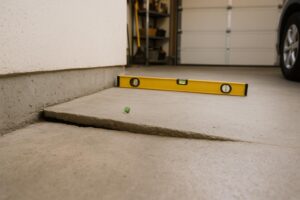
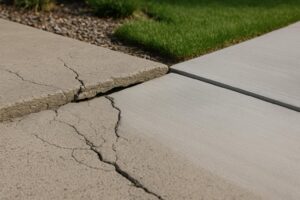
The most obvious sign is a slab that is visibly lower than adjacent sections or your foundation. A concrete step pulling away from your porch, a driveway section that has sunk below the garage floor, or a patio slab tilting towards your home are all red flags. This settling indicates the soil base has already eroded or compacted, creating a void. Filling this void with a stable material is essential before winter moisture can fill it and freeze. Our residential concrete lifting services are designed to correct these exact issues.
2. Water Pooling or Poor Drainage
Does water pool on your driveway or patio after it rains? This is a clear indicator that the surface is no longer properly graded. Uneven concrete disrupts the intended flow of water away from your property. When this water pools, it has more time to seep into cracks and joints, saturating the ground below. Come winter, this trapped water is the primary fuel for frost heave. Professional concrete leveling restores the proper slope, ensuring effective drainage and protecting both the slab and your foundation.
3. Growing Cracks and Widening Gaps
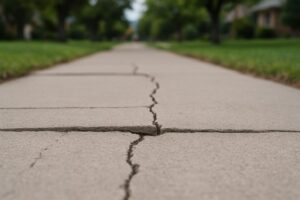
While small hairline cracks can be normal, cracks that are widening, or where one side is higher than the other, signal underlying instability. These openings are direct pathways for water to get beneath your slab. It’s crucial to address both the crack itself and the root cause—the unstable soil. Simply sealing a crack without leveling the slab is a temporary fix. For a lasting solution, consider comprehensive crack repair and joint sealing combined with professional leveling.
4. Rocking or Unstable Slabs
If you can feel a section of your sidewalk or patio move or “rock” when you walk on it, a void has definitely formed underneath. This instability will only worsen with the freeze-thaw cycle. A rocking slab is not only a trip hazard but also places immense stress on the concrete, often leading to complete breakage. Stabilizing the slab before winter is non-negotiable for safety and longevity. This is a common issue we address for both homeowners and businesses that require commercial concrete repair.
The Modern Solution: Polyurethane Foam Injection
Gone are the days of disruptive and messy mudjacking. The modern, superior method for professional concrete leveling is polyurethane foam injection. This innovative technique offers significant advantages, especially when preparing for harsh Denver winters.
Minimally Invasive and Fast
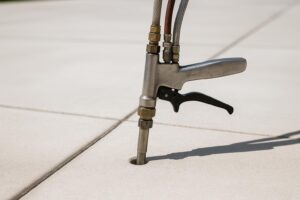
Small, dime-sized holes are drilled into the settled slab. High-density foam is then injected into the voids below. The process is clean, requires minimal equipment, and your concrete is typically ready for use the same day.
Waterproof and Durable
The polyurethane foam is hydrophobic, meaning it repels water. It creates a waterproof barrier under your slab, preventing future water intrusion and erosion. It doesn’t shrink or break down over time, providing a permanent support structure.
Lightweight Yet Strong
The foam is incredibly lightweight, adding only 2-4 pounds per cubic foot to the soil below. This prevents further settling. Despite its light weight, it is strong enough to support significant loads, making it ideal for driveways and commercial slabs.
The Denver Advantage: Why Acting Now Matters
In Denver, the window for effective concrete repair before winter is limited. Once the ground freezes, lifting becomes more complex and sometimes impossible until the spring thaw. By taking action in the fall, you are not just fixing a current problem—you are actively preventing the escalating damage that winter brings. Proper Denver concrete care means being proactive, not reactive. An investment in professional concrete leveling now can save you from the high cost of slab replacement and potential foundation repairs down the road. It ensures your property remains safe and accessible for your family and visitors throughout the snowy months.
Don’t Let Winter Worsen Your Concrete Problems
Protect your investment and ensure your property is safe before the first frost. The expert team at Elevate Concrete Lifting is here to help.
Frequently Asked Questions (FAQ)
How long does polyurethane concrete lifting take?
Most residential projects, like driveways or patios, are completed in just a few hours. The repaired surface is typically ready to bear weight within 30 minutes of the job’s completion.
Is concrete leveling expensive compared to replacement?
Professional concrete leveling is typically much more cost-effective than tearing out and replacing the concrete. It can often save homeowners 50-70% of the cost of replacement, with far less disruption to their property and landscaping.
Will the drilled holes be noticeable?
No. The injection holes are small (about the size of a dime). After the foam is injected, the holes are patched with a cementitious grout that is carefully blended to match the color and texture of your existing concrete, making them nearly invisible.
Can all sunken concrete be lifted?
Most settled concrete slabs can be lifted. However, if the concrete is severely cracked into many small pieces or has crumbled, replacement might be the only option. An experienced professional from Elevate Concrete Lifting can assess your specific situation and recommend the best course of action.
Glossary of Terms
Frost Heave
The upward swelling of soil during freezing conditions caused by the presence of ice. As it grows, it pushes on any object in or on the soil, such as concrete slabs.
Freeze-Thaw Cycle
The cycle of water in soil or concrete freezing and then thawing. This expansion and contraction can cause significant stress and damage to concrete surfaces over time.
Polyurethane Foam Injection
A modern concrete lifting technique that involves injecting high-density, expanding polyurethane foam beneath a settled slab to lift, level, and stabilize it.
Slab
A flat, often rectangular, piece of concrete used for surfaces like patios, driveways, sidewalks, and building foundations.
One Response
https://shorturl.fm/XAaPA